
Movement
Signals, parking, and transit occupancy are used together to cut idle time.
A city is traffic, power, water, lighting, and public safety sharing the same streets. Tronixware connects those services so a control room sees one live picture instead of five isolated systems.
Signals, parking, and transit occupancy are used together to cut idle time.
Leaks, outages, and street lighting report themselves instead of waiting for a complaint.
A city is junctions, lamps, meters, cameras, and bins on the same streets. Tronixware connects them so a control room sees one live picture instead of five isolated contracts.
Signals and parking occupancy follow demand, not a fixed timetable. Street lighting dims when a road is empty. Water and power nodes report leaks and outages. Air, noise, and flood sensors give wards something they can act on the same day. Cameras and structure health feed the same desk as lighting and traffic.
Signal timing and bay occupancy follow live demand, not last year’s plan.
Adaptive street lighting dims on empty roads without leaving them dark and unsafe.
Leaks, outages, and pressure events report themselves instead of waiting for a complaint.
Cameras, flood nodes, and air quality sit with operations, not in a separate portal.
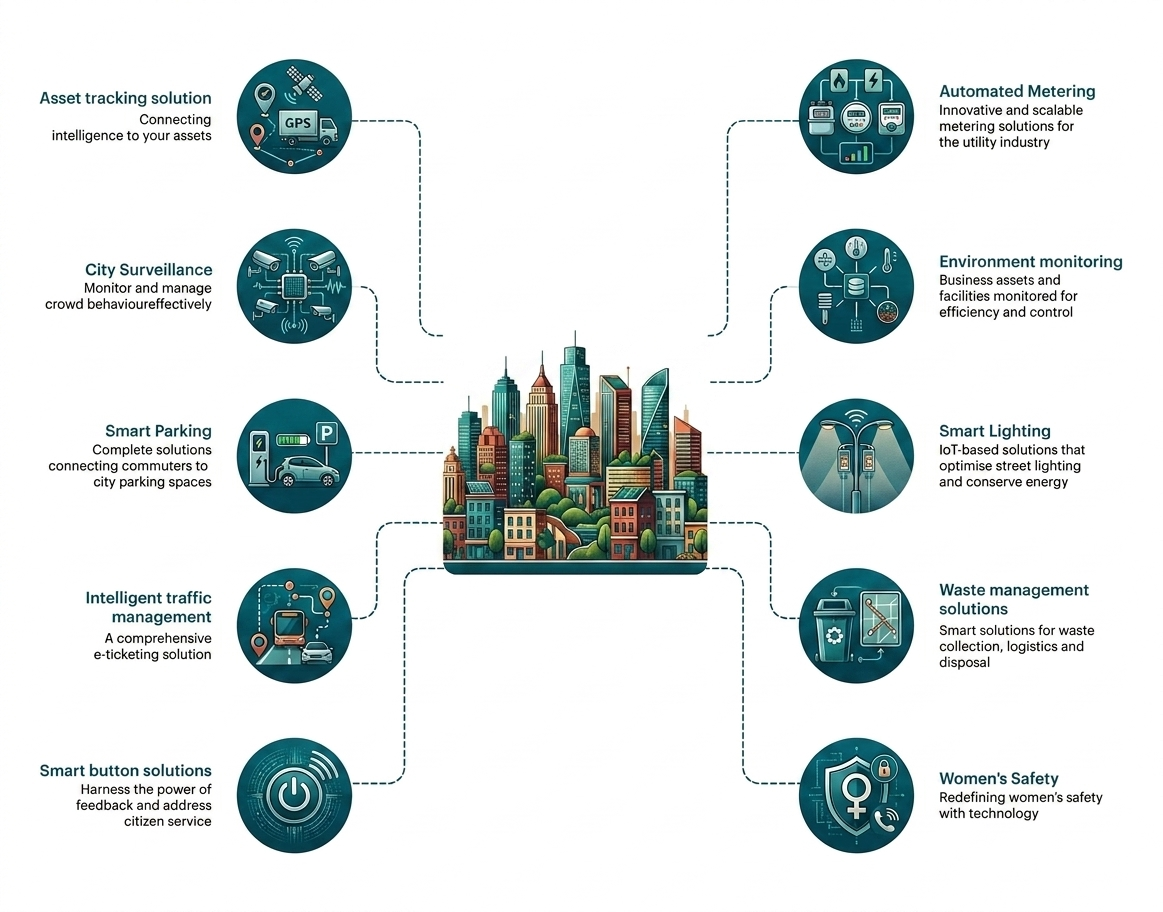
Citizens do not care which department owns a dark street or a flooded underpass. The desk has to.
A stalled junction, a lighting circuit, and a water main can be one evening in one ward. Connected status lets traffic, utilities, and public safety share location and time. Crews go to a pin. Transit occupancy and parking can be read with event days, not guessed from last week.
Outages and floods are tickets with a map point, not a call log.
Bus and metro load is watched with parking when a match or festival hits.
Air and noise data support a same-week action, not an annual PDF.
Police, civic, and utilities look at one occupancy picture during an incident.
Less idle traffic, lighting that costs less, faster leak response, and public space that is actually watched.