Tronixware - Innovative Software Solutions Tronixware - Innovative Software Solutions

Introduction

At Tronixware, we believe the future of the oil and gas industry lies in intelligent connectivity, real-time operational visibility, and industrial automation powered by the Internet of Things (IoT). Oil and gas operations involve highly complex infrastructure, remote assets, critical pipelines, transportation fleets, and safety-sensitive environments that require continuous monitoring and efficient management. IoT technologies enable organizations to connect equipment, sensors, control systems, and field operations into one integrated digital ecosystem that improves operational efficiency, safety, and reliability.

As the industry continues to evolve toward smarter industrial operations, IoT is becoming essential for optimizing upstream, midstream, and downstream processes. Connected devices and intelligent monitoring systems allow operators to collect and analyze real-time data related to temperature, pressure, flow rates, equipment health, and operational performance. This enables faster decision-making, predictive maintenance, reduced downtime, and more efficient resource utilization across industrial facilities and remote operations.

At Tronixware, we develop scalable IoT-driven ecosystems designed to support digital transformation in the oil and gas sector. Our intelligent solutions integrate smart sensors, real-time analytics, predictive monitoring, connected asset management, fleet tracking, and centralized operational dashboards into a secure digital infrastructure. By combining automation, analytics, and industrial connectivity, Tronixware helps organizations modernize critical operations while improving safety, productivity, and long-term operational performance.

With increasing demands for operational efficiency, environmental responsibility, and infrastructure reliability, the oil and gas industry is rapidly adopting connected technologies to create smarter industrial ecosystems. Tronixware empowers energy companies with intelligent IoT solutions that improve visibility across operations, optimize maintenance workflows, reduce operational risks, and enable data-driven industrial management. Through innovation and connected technologies, we help organizations build safer, smarter, and future-ready oil and gas infrastructures.

IoT in Oil & Gas Industries

IoT in the oil and gas industry refers to the use of connected sensors, intelligent devices, automation systems, and real-time communication technologies to monitor, manage, and optimize industrial operations. These technologies enable companies to continuously collect and analyze operational data from drilling sites, pipelines, refineries, transportation fleets, storage facilities, and industrial equipment. By connecting physical infrastructure with digital intelligence, organizations can improve efficiency, enhance safety, and reduce operational risks across the entire energy ecosystem.

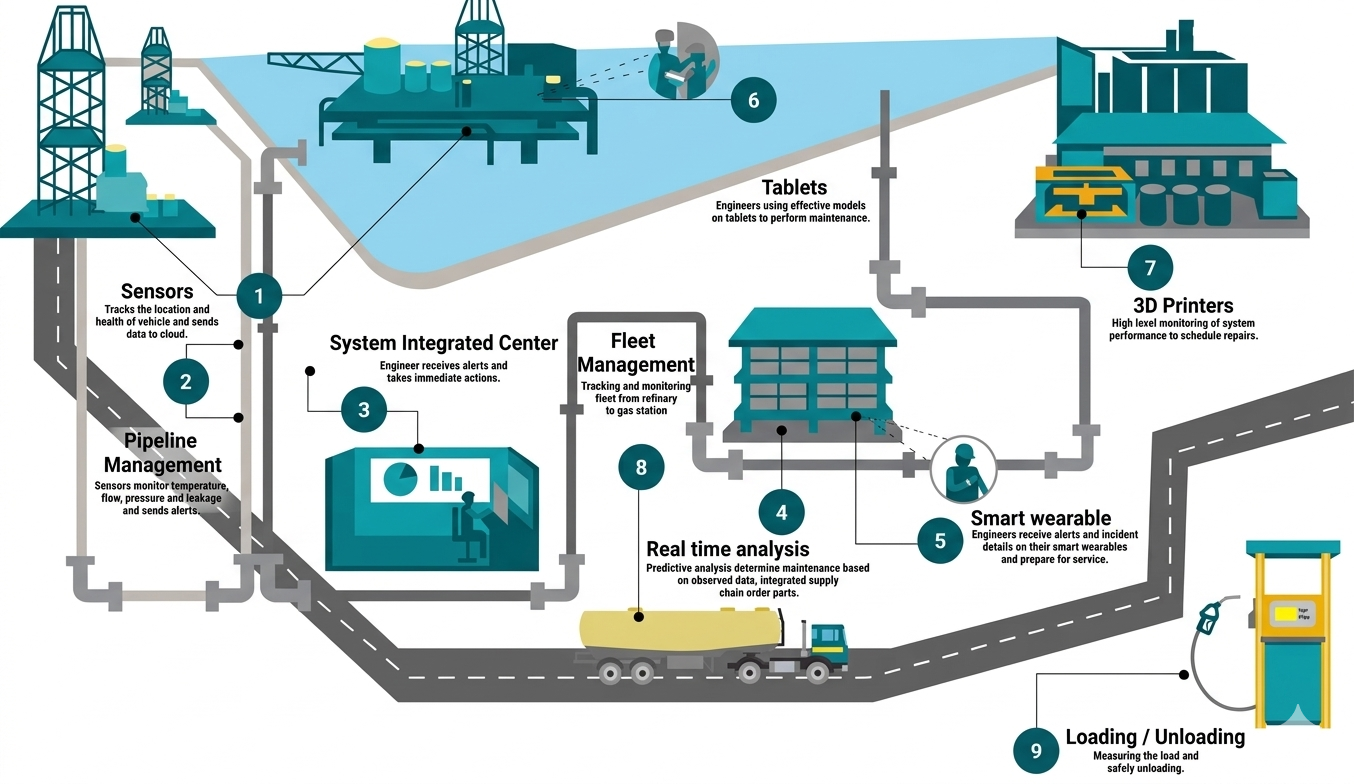
One of the most critical applications of IoT in oil and gas is real-time equipment and pipeline monitoring. Connected sensors continuously track important operational parameters such as pressure, temperature, flow rate, vibration, and equipment health. These sensors help identify anomalies, leakages, or equipment failures before they become catastrophic, allowing engineers to take proactive corrective actions. IoT-enabled pipeline management systems also help optimize fuel transportation routes, reduce leakage risks, schedule predictive maintenance, and improve network integrity across large industrial infrastructures.

IoT also plays a major role in centralized operational control and predictive analytics. Intelligent system integration centers collect data from multiple industrial assets and monitoring devices into a centralized platform for real-time visibility and analysis. Advanced analytics and predictive monitoring tools help organizations identify operational inefficiencies, predict equipment failures, reduce downtime, and optimize maintenance schedules. By leveraging real-time industrial data, companies can improve productivity while reducing operational disruptions and maintenance costs.

Connected mobility and workforce management solutions further strengthen oil and gas operations through IoT-enabled fleet monitoring, smart logistics, and wearable technologies. GPS-enabled fleet management systems allow operators to track the real-time location, health, and performance of industrial vehicles, trucks, and field equipment. Smart tablets, mobile applications, and wearable devices help field engineers access operational data remotely, communicate more effectively, and monitor equipment performance from any location. IoT also supports smarter loading and unloading operations by enabling intelligent weighing systems and automated asset tracking for logistics optimization.

At Tronixware, we focus on building connected industrial ecosystems that integrate intelligent monitoring, predictive analytics, automation, and operational intelligence into one scalable digital infrastructure. Our IoT-driven solutions support pipeline monitoring, connected asset management, predictive maintenance, industrial analytics, fleet monitoring, remote equipment diagnostics, and centralized operational dashboards. By enabling real-time industrial visibility and intelligent automation, Tronixware helps oil and gas organizations improve operational efficiency, reduce risks, and build future-ready industrial ecosystems powered by connected technologies.

IoT in oil and gas industries

Benefits of IoT in Oil & Gas Industries

IoT-powered ecosystems provide significant operational, financial, and safety benefits across the oil and gas industry. One of the major advantages is improved operational efficiency through real-time monitoring and predictive maintenance. Connected systems continuously track the performance and health of industrial equipment, pipelines, compressors, and transportation assets, allowing organizations to identify issues early and reduce unplanned downtime. This leads to optimized maintenance schedules, improved productivity, and reduced operational disruptions across industrial facilities.

Another major benefit of IoT is enhanced safety and risk management. Oil and gas operations often involve hazardous environments where equipment failures, leakages, and operational errors can lead to major accidents and environmental damage. IoT-enabled sensors and intelligent monitoring systems help detect abnormal pressure levels, gas leaks, temperature fluctuations, and equipment malfunctions in real time. Automated alerts and centralized monitoring platforms allow operators to respond quickly, improving workplace safety and minimizing operational risks.

IoT also improves asset utilization, logistics efficiency, and industrial decision-making. Connected fleet management systems help organizations track vehicle performance, optimize transportation routes, reduce fuel consumption, and improve logistics coordination. Real-time analytics and centralized dashboards provide valuable operational insights that support data-driven decision-making, resource optimization, and long-term infrastructure planning. Smart loading and unloading systems further improve transportation efficiency while ensuring compliance with industrial safety and weight regulations.

Sustainability and environmental optimization are also important advantages of IoT in the oil and gas sector. Connected systems help organizations monitor emissions, reduce fuel wastage, optimize energy consumption, and improve environmental compliance through real-time operational visibility. Predictive maintenance and automated monitoring reduce unnecessary resource consumption while extending the lifespan of industrial equipment and infrastructure. These capabilities help organizations achieve greater operational sustainability while improving overall industrial performance.

Through intelligent IoT ecosystems, Tronixware helps oil and gas companies transition toward smarter, safer, and more connected industrial operations. Our solutions enable centralized operational visibility, predictive analytics, connected asset monitoring, intelligent automation, and real-time industrial intelligence that improve scalability and long-term operational performance. By combining IoT technologies with secure digital infrastructure and advanced analytics, Tronixware empowers organizations to create efficient, resilient, and future-ready oil and gas ecosystems designed for the next generation of industrial transformation.