Tronixware - Innovative Software Solutions Tronixware - Innovative Software Solutions

Introduction

At Tronixware, we believe the future of transportation infrastructure lies in intelligent connectivity, real-time monitoring, and data-driven mobility ecosystems powered by the Internet of Things (IoT). Modern highway infrastructure is evolving rapidly to support increasing traffic volumes, smart mobility systems, electric vehicles, and next-generation transportation technologies. Smart highways leverage IoT-enabled sensors, communication networks, analytics platforms, and intelligent automation systems to improve road safety, traffic efficiency, sustainability, and infrastructure reliability.

As urbanization and industrial development continue to grow, highways and roadway infrastructure must become smarter, safer, and more responsive. IoT technologies allow transportation authorities and infrastructure operators to continuously monitor road conditions, traffic flow, environmental factors, vehicle movement, and structural health in real time. This enables faster decision-making, predictive maintenance, automated traffic management, and enhanced operational visibility across transportation networks.

At Tronixware, we develop scalable IoT-powered ecosystems designed to support the digital transformation of highway infrastructure and intelligent transportation systems. Our solutions integrate connected sensors, smart monitoring systems, traffic analytics, predictive maintenance platforms, centralized control dashboards, and real-time communication networks into one unified digital ecosystem. By combining intelligent automation, cloud infrastructure, and advanced analytics, Tronixware helps organizations create safer, more efficient, and future-ready highway infrastructures.

With the growing adoption of smart cities, autonomous mobility, electric vehicles, and connected transportation technologies, smart highway infrastructure is becoming a critical foundation for future mobility ecosystems. Tronixware empowers governments, infrastructure developers, transportation authorities, and industrial operators with intelligent digital solutions that improve traffic management, enhance roadway safety, optimize infrastructure performance, and support sustainable transportation initiatives through connected IoT ecosystems.

IoT in Highway Infrastructure

IoT in highway infrastructure refers to the integration of connected sensors, communication systems, intelligent devices, and real-time analytics platforms into roadway and transportation infrastructure. These technologies enable transportation authorities to collect, monitor, and analyze real-time data related to traffic conditions, vehicle movement, road safety, environmental factors, and infrastructure health. By connecting physical roadway infrastructure with intelligent digital systems, organizations can improve operational efficiency, reduce congestion, and create smarter transportation ecosystems.

One of the most important applications of IoT in highway infrastructure is intelligent traffic monitoring and management. Smart highways utilize radar sensors, cameras, RFID systems, fiber-optic communication networks, and 5G connectivity to monitor traffic density, vehicle speed, congestion levels, and accident-prone zones in real time. Intelligent traffic systems can automatically optimize signal timings, reroute traffic, provide real-time road alerts, and support emergency response operations through connected communication networks. These technologies improve traffic flow, reduce delays, and enhance road safety for drivers and pedestrians.

IoT also plays a major role in roadway safety and infrastructure monitoring. Smart roads equipped with embedded sensors continuously monitor road conditions, weather changes, bridge stability, structural vibrations, and environmental conditions such as icy surfaces or heavy rainfall. Connected infrastructure systems can instantly detect accidents, hazardous road conditions, or infrastructure stress and send automated alerts to transportation authorities and drivers. Predictive maintenance systems powered by IoT analytics help identify infrastructure deterioration early, reducing maintenance costs while improving highway reliability and operational continuity.

IoT in highway infrastructure

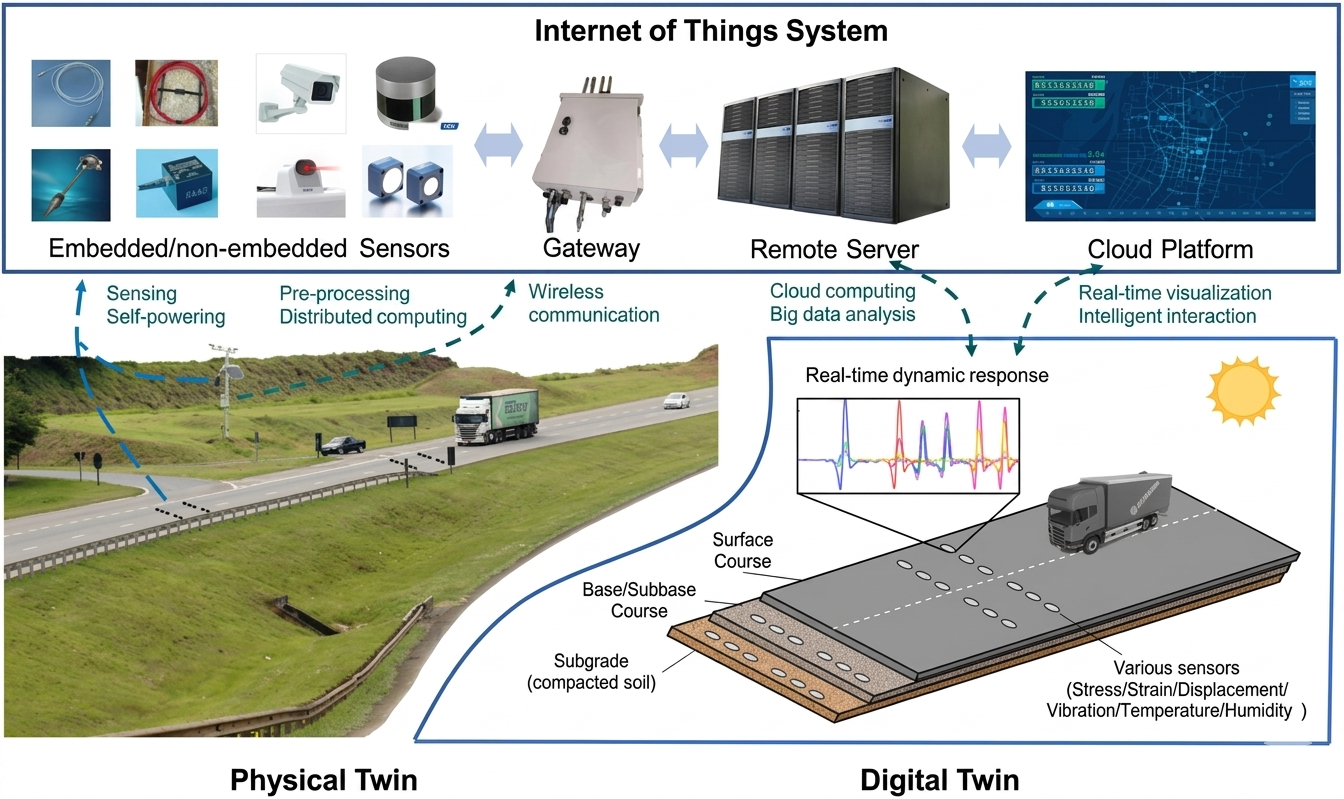
The evolution of electric mobility and connected transportation ecosystems is also driving innovation in smart highway infrastructure. IoT-enabled EV charging systems, dynamic wireless charging roads, connected tolling systems, and Vehicle-to-Everything (V2X) communication technologies are transforming how vehicles interact with infrastructure. Smart highways can support autonomous vehicles, connected mobility platforms, intelligent signage systems, and real-time communication between vehicles and road infrastructure to create safer and more efficient transportation ecosystems. Advanced technologies such as AI-driven traffic management, digital twin platforms, and 5G-enabled roadway communication further strengthen operational intelligence across transportation networks.

At Tronixware, we focus on building connected highway infrastructure ecosystems that integrate intelligent monitoring, automation, predictive analytics, and centralized operational visibility into one scalable digital infrastructure. Our IoT-driven solutions support smart traffic management systems, roadway monitoring platforms, connected tolling infrastructure, predictive maintenance systems, intelligent lighting, environmental monitoring, EV charging ecosystems, and real-time operational dashboards. By enabling intelligent roadway operations and connected transportation infrastructure, Tronixware helps organizations improve mobility efficiency, roadway safety, infrastructure reliability, and long-term sustainability through advanced IoT technologies.

Benefits of IoT in Highway Infrastructure

IoT-powered highway infrastructure ecosystems provide significant operational, economic, environmental, and safety benefits for transportation authorities and infrastructure operators. One of the major advantages is improved traffic efficiency through real-time monitoring and intelligent automation. Connected systems help optimize traffic flow, reduce congestion, minimize travel delays, and improve roadway utilization by continuously analyzing vehicle movement and transportation patterns. Intelligent traffic management systems can dynamically adjust traffic signals, reroute vehicles, and prioritize emergency transportation routes based on real-time conditions.

Another major benefit of IoT in highway infrastructure is enhanced road safety and emergency response management. Connected roadway sensors, surveillance systems, weather monitoring devices, and V2X communication technologies enable transportation authorities to detect accidents, hazardous conditions, speeding vehicles, and infrastructure risks in real time. Automated alerts and connected communication systems improve response times for emergency services while helping drivers make safer travel decisions. Smart roads also support autonomous vehicle integration by enabling real-time communication between vehicles and infrastructure systems.

IoT also contributes significantly to infrastructure optimization and predictive maintenance. Continuous monitoring of roads, bridges, tunnels, lighting systems, and transportation assets helps authorities identify structural issues and maintenance requirements before failures occur. Predictive analytics reduce downtime, lower maintenance costs, improve asset lifespan, and ensure long-term infrastructure reliability. Digital twin technologies further enhance operational planning by creating real-time virtual models of highway systems for infrastructure simulation, risk analysis, and future expansion planning.

Sustainability and energy efficiency are also key advantages of IoT-enabled smart highways. Intelligent traffic systems reduce fuel wastage and emissions caused by congestion, while connected lighting systems optimize energy consumption through automated controls. Smart highways also support renewable energy integration through solar-powered infrastructure and EV charging ecosystems that encourage electric mobility adoption. Wireless EV charging roads and intelligent energy management systems further contribute toward greener and more sustainable transportation environments.

Through intelligent IoT ecosystems, Tronixware helps highway infrastructure industries transition toward smarter, safer, and more connected transportation environments. Our solutions enable centralized operational visibility, predictive maintenance, intelligent automation, connected roadway monitoring, and advanced transportation analytics that improve scalability and long-term infrastructure performance. By combining IoT technologies with secure digital infrastructure, AI-driven analytics, and cloud-enabled platforms, Tronixware empowers organizations to create future-ready highway ecosystems designed for intelligent mobility, operational excellence, and sustainable transportation growth.